Showing posts with label Brief 1 : Telegraph. Show all posts
Showing posts with label Brief 1 : Telegraph. Show all posts
Saturday, 26 November 2011

Wednesday, 16 November 2011
Typeface `in Context

Thinking of where the Property typeface can be mocked up to be shown in context.
Tuesday, 18 October 2011
Reference to content - North Africa


Freestylee – Michael Thompson
North Africa is experiencing what is now called the biggest revolution in modern times as millions of protesters join in the fight against oppression, dictatorship and political domination. With that said, designers and artists are joining in protest and here is a small collection of some digital/graphic art. Please feel free to suggest some more we would love to see what you’ve found.http://www.africandigitalart.com/2011/02/revolution-egypt-tunisia-designers-react/
Contents references Pixacao
Contents

Nunca
http://www.flickr.com/photos/-nunca/2853132215/in/photostreamhttp://www.juxtapoz.com/Graffiti/pixacao
Developed in the favelas of Brazil, Pixcao hand styles are aggressive and distinctly unique to this region of the world. They commonly appear to stack up the sides of walls as if the writers run around with ladders in the night. http://en.wikipedia.org/wiki/Pixação |
Pixação, known also as "wall writings," began in the 1940s and 50s as political statements written in tar and “were often written in response to the slogans painted by political parties across the streets.” [2]. “Piche” is the Portuguese word for tar, so Pixação refers to writings made in it. In the 1970s, Pixação almost disappeared, however it was revived in the 1980s by a group of kids who began writing their names, and the names of their crews, instead of political slogans. [3].
Although Pixação is no longer made up of political statements, but names, it is still a social statement.
Pixação is a “vehicle for the youth of the city to assert their existence and self-worth, and to do it loudly. As a social protest, Pixação is brutal, effective and pulls no punches. There is no country on earth with a worse distribution of wealth than Brazil. For the rich, there are nice buildings. For the poor, there are shanty towns. Pixação exists on the very surface of the constested wealth, and promises to keep on punishing the fortunate until they produce a world less punishing to begin with.”
http://www.thewordisbond.com/archives/13043

In an attempt to keep a dying - in the sense of media attention - aspect of Hip Hop alive, lets give graffiti a little attention for quick minute.
Brazilian graffiti has it's own very unique style. A style that has been greatly influenced by a group that call themselves, 'The Twins' or 'Os Gemeos.' It's likely you've seen their style before, it has been imitated many a time, but never duplicated. Impossibly skinny limbs are typical in a Gemeos piece. Their depictions of people rarely look like people, instead they resemble more a cartoon character. However don't be fooled by the lack of realism, look closely and you'll see intricate details placed in just the right places - such as knuckle creases, hair, clothing - so as to make it easy for comparisons to be drawn between the piece and its real life counterpart, if there is one...
Tuesday, 11 October 2011
Brazil Type Research


Pixação, known also as "wall writings," began in the 1940s and 50s as political statements written in tar and “were often written in response to the slogans painted by political parties across the streets.” [2]. “Piche” is the Portuguese word for tar, so Pixação refers to writings made in it. In the 1970s, Pixação almost disappeared, however it was revived in the 1980s by a group of kids who began writing their names, and the names of their crews, The letters are usually of equal height and spacing, although technique varies in different cities around Brazil.Although the lettering originally reflected the typography of eighties heavy metal record covers, the styles have evolved over time
Os Gêmeos (Portuguese for The Twins) are graffiti artist identical twin brothers (born 1974) from São Paulo, Brazil, whose real names are Otavio and Gustavo Pandolfo. They started painting graffiti in 1987 and gradually became a main influence in the local scene, helping to define Brazil's own style. Their work often features yellow-skinned characters - taken from the yellow tinge both of the twins have in their dreams - but is otherwise diverse and ranges from tags to complicated murals. Subjects range from family portraits to commentary on São Paulo's social and political circumstances, as well as Brazilian folklore. Their graffiti style was influenced by both traditional hip hop style and the Brazilianpixação movement.[1]


Os Gêmeos (Portuguese for The Twins) are graffiti artist identical twin brothers (born 1974) from São Paulo, Brazil, whose real names are Otavio and Gustavo Pandolfo. They started painting graffiti in 1987 and gradually became a main influence in the local scene, helping to define Brazil's own style. Their work often features yellow-skinned characters - taken from the yellow tinge both of the twins have in their dreams - but is otherwise diverse and ranges from tags to complicated murals. Subjects range from family portraits to commentary on São Paulo's social and political circumstances, as well as Brazilian folklore. Their graffiti style was influenced by both traditional hip hop style and the Brazilianpixação movement.[1]
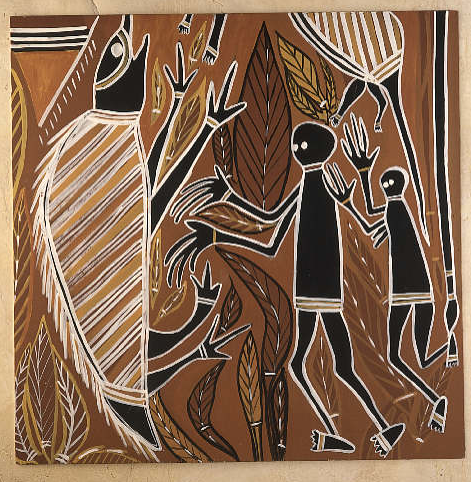
Australia research for type
The Sydney Opera House is considered one of the finest architectural achievements of the 20thcentury. It is also one of the most recognizable buildings on the planet. Even those who don't actually know that it is located in Australia or that it is an opera house are familiar with its rising segmented shape. The conventional wisdom surrounding the Sydney Opera House is that its gleaming white circular spires is supposed to represent the sails on the tall sailing ships that brought so many of the ancestors of the Anglo residents of modern day Australian to the island that would pay penance for their treatment of the indigenous tribes by being forced to admit they were also responsible for Jacko, Yahoo Serious and makingMel Gibson a star. In fact, the design of the Sydney Opera House is not based upon sails of wooden ships.


Construction of the Sydney Opera House was initiated in the 1950s by Eugene Goossens, who was the conductor of the Sydney Symphony Orchestra. A competition to arrive at a final design commenced thereafter and the winner was a Danish gentlemen named Jorn Utzon. In light of the work of Frank Gehry and all the other fantastical designs that place themselves in opposition to the standard square and rectangular means of constructing buildings today, Utzon's concept probably came as quite a shock to those intent on building the opera house. Rather than straight and narrow or broad and flat, Utzon proposed the radical idea of huge shell-shaped structures exuding outward from the center of the building. Utzon's opera house design was even more bizarre than some of the circular buildings that were the epitome of edgy at the time. The site for the new Sydney Opera House was to be located on the water and so it perhaps seems just natural accept that the design was intended to represent sails on a ship.
As with many things that seem obvious, however, it is simply not true that the elegant design of the Sydney Opera House as anything to with the conventional wisdom. The inspiration for those segmented curvatures atop the most famous building in the Southern Hemisphere was not the sails of a ship, but rather a simple orange. The Sydney Opera House is supposed to look like the segments of a orange that has been carefully sliced open. Regardless of whether the Sydney Opera House reminds you of orange slices or sails atop a ship, it has gone on to become a modern architectural wonder despite the fact that history's most famous architect, and the real life inspiration for Ayn Rand's ridiculously simplistic hero Howard Roarke, said of it: "The circus tent is not architecture."




Subscribe to:
Posts (Atom)